In this article
You started an ebook. Maybe it is 15 pages in. Maybe it is three bullet points sitting in a Google Doc that has been open for two weeks, silently judging you. You know you need a lead magnet. You just cannot decide if an ebook is the right call, or if a simple checklist is enough. This guide settles it. Walk away knowing exactly which format to build first, and why.

Checklist vs Ebook: The Quick Comparison
Before getting into the mechanics, here is the summary:
| Format | Effort | Conversion | Best For |
|---|---|---|---|
| Checklist | Low (typically 2–4 hours) | Tends to run higher | Specific tasks, quick wins, action-takers |
| Ebook | High (typically 2–6 weeks for most creators) | Tends to run lower | Deep authority, complex topics, credibility-sensitive audiences |
The table tells most of the story. But knowing the reason behind each row is what lets you make the right call for your specific audience and situation.
Why Checklists Convert Better (For Most Creators)
Checklists win because they make a specific promise.
“Download this and you will know exactly what to post this week.” That is a clear outcome. The visitor knows what they are getting, and they know it will be useful right away. Compare that to “Download my free guide to content marketing.” That is not a promise. It is a description.
Specificity does two things. First, it qualifies your subscriber. Someone who opts in for your “pre-launch product checklist” is a more useful lead than someone who downloaded a generic “ultimate guide.” The specific person is telling you exactly what problem they have right now. Second, specificity reduces friction on the opt-in page. When the promise is tight, the headline almost writes itself: “Enter your email and get the 12-step checklist.” No hedging. No over-explaining.
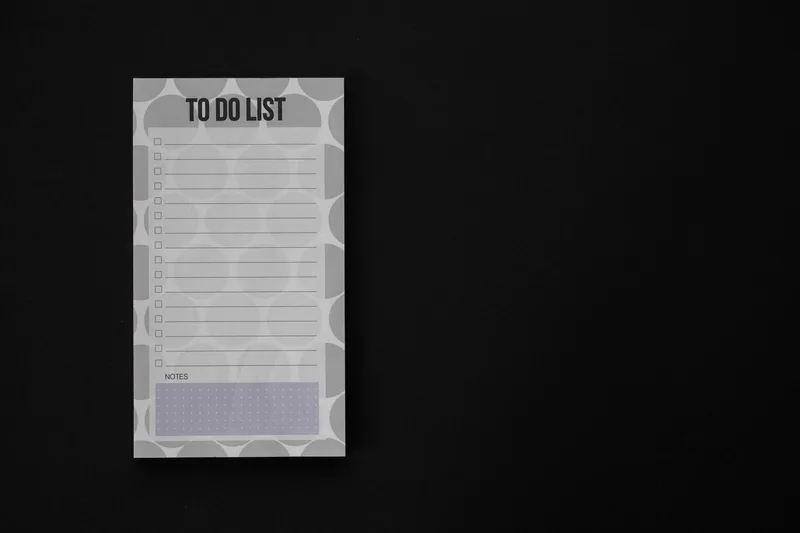
There is also the consumption problem. When someone downloads your checklist, there is a real chance they open it within an hour and actually work through it. That is the moment your subscriber forms their first impression of your work. A one-page checklist used the same day you opt in does more to build trust than a 40-page ebook that sits in someone’s downloads folder for six months.
The creation speed argument is not a minor point. A checklist lead magnet takes most creators 2–4 hours to produce: outline the steps, write them up, drop them into a Canva template, export as PDF. That is a Saturday morning project. The faster you ship, the faster you collect real subscriber data and learn what your audience actually responds to.
The Real Reason Ebooks Underperform
Ebooks are not inherently bad lead magnets. The problem is how most creators end up building them.
The typical ebook journey: a creator decides to write an ebook, picks a broad topic (“The Complete Guide to Growing Your Instagram Presence”), and starts drafting. Three weeks in, it is 22 pages with six chapters and none of them are finished. The scope crept because the topic was too wide. The creator loses momentum. The ebook either never ships or ships six weeks later, watered down, and the opt-in page headline is vague because the ebook itself is vague.
Even when an ebook does ship, the conversion problem usually starts at the headline. “Download my free ebook on content marketing” does not tell the reader what specific problem it solves for them, specifically, this week. Broad topics attract broad, lower-intent audiences. Checklists force specificity by design: they have to name the exact action. “The 15-Step Pre-Launch Checklist for First-Time Product Creators” is more specific than any ebook title for the same topic, and that specificity directly lifts conversion.

There is also a perceived effort problem on the reader’s side. An ebook implies a time commitment. Visitors know they need to set aside 20–30 minutes to read it properly. Many opt in intending to read it later, and “later” rarely comes. A checklist is different. Five minutes to scan, then use it immediately. Low friction from both sides of the exchange.
When an Ebook Actually Makes Sense
There are real scenarios where an ebook beats a checklist, and it is worth being honest about them.
You are establishing authority in a complex, credibility-sensitive topic. If you are a financial planner explaining a multi-step investment framework, or a health coach who has synthesized years of client results into a proprietary protocol, a deep-dive ebook signals seriousness. The length becomes proof of expertise, not a liability. The reader expects depth as evidence that you know what you are talking about.
Your specific audience genuinely expects long-form content. Academic, B2B, and research-oriented audiences often do want depth. A marketing director downloading a resource on enterprise content strategy is willing to read 30 pages. A busy coach on her lunch break is not. Know your reader’s typical content diet before you decide.
You already have the content written and just need to repackage it. If you have a series of 8–10 long blog posts on one topic, compiling them into a formatted ebook is relatively low effort. You are not writing from scratch. The ebook is a repackaging job, and the time cost drops significantly. This is a much better reason to create an ebook than starting one from zero.
You are later in your brand-building phase. Ebooks make more sense as a second or third lead magnet, after you have already validated what your audience actually signs up for, and you have the data to know what they want to read at length.
Four Situations: Which Format to Build
Most format comparison articles leave you with general principles and no decision. Here is the actual call by situation.
You have nothing yet. Build the checklist. Ship it this weekend. Collect emails, see who signs up, learn what resonated. You can add a longer resource later when you know what your audience actually wants. You cannot collect that learning from a lead magnet you have not finished yet.
You have a half-finished ebook. Do not force it to completion out of sunk-cost thinking. Ask yourself: can the core insight from this ebook be distilled into a one-page checklist or a short cheat sheet? If yes, publish the distilled version now. Use the ebook draft as a future content upgrade for your highest-traffic posts once it is done properly.
You serve a credibility-sensitive audience. Lawyers, doctors, consultants, and high-ticket service providers often need to signal expertise before a visitor trusts them enough to hand over an email address. If a one-page checklist feels too thin for your positioning, a well-designed short-form ebook (8 to 12 pages, not 40) can work. Keep it tight. The goal is not word count. The goal is “does this make me look like the expert they need.”
You want to segment your list from the start. Use both. A checklist for your most action-oriented visitors (“pre-launch checklist for X”) and a deeper guide for your most serious prospects. Two lead magnets targeting two different intent levels will give you useful segmentation faster than one general lead magnet targeting everyone.
The Conversion Mechanic: How Each Format Lands Differently on the Opt-In Page
This is where most format comparisons miss an important detail.
A checklist converts at the opt-in page level partly because of how the landing page works. A specific checklist gives you a specific headline, a specific preview image (the actual checklist design), and a specific call to action. Every element on the page can point to the same concrete deliverable. Tools like ConvertKit make it straightforward to deliver either format by email, but the opt-in page itself is where the checklist consistently wins on specificity.
An ebook landing page usually has a problem: the ebook covers too much, so the headline becomes generic, the preview image is a generic cover, and the CTA is “download the free guide.” Nothing is specific enough to create urgency. The reader has no clear reason to enter their email right now versus next time they see your site.
If you do go with an ebook, treat the landing page like a checklist landing page: pick one specific benefit, name one specific outcome, preview one specific piece of content. The best-converting ebook opt-in pages do not feel like “big free resource.” They feel like “the answer to this specific question you have right now.”

The Verdict: Start With the Checklist
For the majority of solo creators, coaches, and small personal brands, especially those earlier in their list-building journey — the checklist is the right first lead magnet.
It is faster to build. It converts well when the promise is specific. People actually use it. And it teaches you more about your audience in 30 days than a three-month ebook project teaches you before you even publish.
The ebook has its place. It is a legitimate format for the right situation. But that situation is almost never “I am just starting my list” or “I do not know which format to choose.” Those situations call for a checklist.
Build the thing you can ship this weekend. Not the thing that might be ready by the end of the quarter.
FAQ
Is a checklist too simple to be a valuable lead magnet? No. The word “simple” gets confused with “low value.” A checklist is high value precisely because it is simple: it reduces a complex process to clear steps that someone can act on immediately. A visitor who downloads your checklist and uses it today trusts you more than someone who downloaded your 30-page ebook and never got past page four. Value is measured by what the reader actually does with the resource, not by how long it is.
How many items should a checklist lead magnet have? Somewhere in the range of 10 to 20 tends to work well. Fewer than 10 can feel thin for a dedicated opt-in. More than 25 starts to feel like a to-do list nobody wants to finish. The goal is one page, two pages at most. If your checklist is spilling to four pages, some items should be bundled, simplified, or cut. A checklist that fits on one page and gets used is better than a two-page checklist that gets bookmarked and forgotten.
Can I offer both a checklist and an ebook on the same site? Yes, and this works well once you have validated your audience. A quick checklist as a universal site-wide opt-in, and a deeper ebook gated behind a high-intent page, gives you two entry points for two different visitor types. The risk is splitting your attention while you are still building. Build one lead magnet, validate it, then add the second when you have the data to know what it should cover.
What if my audience expects long-form content? Build the ebook — but first confirm you actually know this from direct feedback rather than assumption. Ask your audience directly in a social post or email: “Quick question: would you rather get a 2-page action checklist or a 20-page guide on this topic?” Many creators discover their audience’s answer is different from what they expected. When the answer is genuinely “guide,” go deep and go specific. A focused 12-page ebook on one narrow problem beats a sprawling 40-page guide on a broad topic every time.
Which format works better as a content upgrade on a specific blog post? For most blog posts, a matching checklist content upgrade outperforms a general ebook. The reason: a content upgrade works because it extends the specific post the reader is already engaged with. A “12-Step Post-Publishing Checklist” attached to your article on publishing workflows is more relevant than a general “Content Marketing Guide.” Match the format to the specificity of the post, and most of the time that means checklist.
Keep Reading
- How to Create a Checklist Lead Magnet — Step-by-step walkthrough for building your first checklist in Canva, including which template to start with.
- Lead Magnet Conversion Rate: What Is Good and How to Improve Yours — Real benchmarks by placement type and a diagnostic process for a low opt-in rate.
- Why Your Lead Magnet Is Not Converting — The most common reasons lead magnets underperform after launch, with specific fixes for each.
- Lead Magnet Template: Copy This Framework for Any Format — A fill-in-the-blank structure that works for checklists, cheat sheets, and short-form guides.
- Simple Lead Magnet Ideas You Can Build This Weekend — If you are still deciding what your checklist should cover, start here.
What to Do Next
Choose the path that fits where you are right now.
Your Lead Magnet Is Two Hours Away. Pick Your Format First.
One email. One page. Match your audience type to the lead magnet format most likely to convert — so you stop flip-flopping and start building.
Send Me the Decision MatrixRelated Articles
Lead Magnet PDF Examples: 5 Real Formats Broken Down So You Can Steal Them
Why Your Lead Magnet Is Not Converting: 7 Causes and Fixes
Low opt-in rates have specific causes. This diagnostic identifies which of seven problems is holding back your lead magnet and what to fix first.
Lead Magnet Follow-Up Emails: The 5-Email Sequence That Turns Downloaders Into Buyers
Most lead magnets get downloaded and forgotten. Five follow-up emails fix that: what each one says, when to send it, and how to set up the automation.